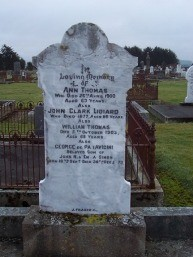
14.09.1789 ~ 09.01.1876
A ship boy in Nelson’s navy, a Jack Tar, a South Seas whaler. A lone white man in a land of fearsome warriors. John Lidiard’s story tells the adventures of a father, a husband, a settler, and a man who witnessed the birth of the nation we now know as Aotearoa New Zealand. Note: Where written historic accounts of John Lidiard spell his name differently, that spelling is also used here.

The beginning
On the 14th day in the 9th month of the year 1789, John Lidiard is born in Deptford, England. At this time, Deptford prospers as home to the Royal Navy Dockyards, where wooden warships are built, victualed, and repaired under the shadow of London on the banks of the River Thames.
Deptford town has a long, colourful seafaring history. Sir Walter Raleigh, Sir Francis Drake, and Captain James Cook had all set out from here. Thousands of lighter boats fill the waterways, ferrying crew and cargo between the ships and wharves. River pirates salvage what they can when boats sink into the murky waters, and pilfer the rest from warehouses.
Admirals live in beautiful houses in Albury Street but sailors are at home in the riverside taverns. Press gangs roam the cobbled streets in search of able bodied men to abduct and force into a life at sea.
While poor, young children work as chimney sweeps or in damp, dangerous factories for twelve hours a day, true hardship is reserved for the most destitute. For the people languishing in poor houses or on prison hulks waiting to be transported to the other side of the world, theirs is a fate worse than death.
On 11 October, John Clark Lidiard is baptised at the ancient parish of St Nicholas, under the patron saint of sailors, protected by the skull and crossbones on its gate.
Very little is known of his early years, but for a young boy, there is only one way out of Deptford, and that is to join the Royal Navy.
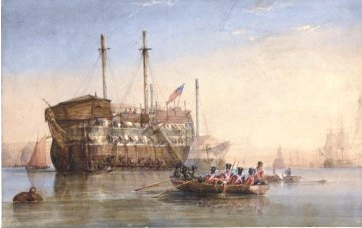
Some ship boys are sold into service by their parents to repay debts or because it’s one less mouth to feed. Others are drawn to the romance of adventure. In His Majesty’s Royal Navy, young volunteers can get an apprenticeship, an education, and a chance to earn a living. They enter the navy through port flagships or the Marine Society, learning the ropes on the Thames before being assigned to ships as servants to officers or senior seamen. But life at sea is often brutal. During battle they race between decks with gunpowder hidden beneath their clothes. If they are lucky, they will escape being maimed or killed by a wayward spark.
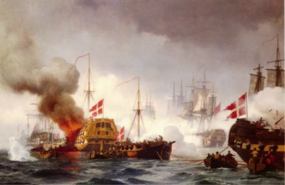
In 1801, at age eleven, John takes part in the Battle of Copenhagen. While his ship is not yet known to his ancestors, HMS Blanche having been built and manned at Deptford, sails to join to join Sir Hyde-Parker’s fleet in Yarmouth bound for the Baltic. Perhaps John Lidiard is a boy on this ship?
The battle is hot work at close quarters and hundreds of men are killed on both sides. During battle, one of Admiral Hyde Parker’s officers, Horatio Nelson, places his telescope to his blind eye. Unable to see the Admiral’s signal to retreat, he ‘turns a blind eye’ and continues to rally his men in battle. The English come away from Copenhagen resounding victors with all but two of the Danish fleet burned, captured, or destroyed.
A man at sea
By age 25, John Lidiard has risen to Captain of the Maintop, a post reserved for only the most reliable and agile of able-bodied seamen. Men who worked in the upper rigging perform the most demanding work aloft. It takes a sailor of great skill and athletic ability to be in charge of a crew in the tops. Even as Captain of the Maintop, John’s rank is still that of a rating, well below the officers. Sailors work hard for their pay and to earn their share in the prize money of captured enemy ships.
In 1812, during the naval blockade of Boston, John serves aboard the 74 gun razee, HMS Majestic. When British ships begin intercepting American merchant vessels and taking their men, the war of 1812 is declared. The super frigates USS Constitution and USS President are pride of the US Navy. Britain desperately wants to capture one of these prizes to rally the English at home and at sea.
In January 1815, HMS Majestic leads a small squadron of British vessels that eventually run down the USS President as she tries to escape from the harbour during a snowstorm. Having lost a fifth of her crew in the battle, USS President is defeated and taken back to England, the ultimate high seas trophy, albeit severely damaged when a storm hits the fleet after her capture.
Back in England, John transfers to HMS Bellerophon, one of the Royal Navy’s most famous ships. Known by sailors as ‘Billy Ruff’n’, she has seen action at the Glorious First of June, Battle of the Nile, and Battle of Trafalgar. In 1815, with John Lidiard in her crew, she takes on her most famous passenger of all. Leaving Plymouth in May, HMS Bellerophon sails to Rochefort and while there, the French General, Napoleon, having been defeated at Waterloo, is taken on board by Captain Maitland.
Napoleon is given protection by England and taken back to Torbay where word quickly spreads that the little general is on board. Thousands crowd into small boats and surround the ship, desparate to catch a glimpse of the man himself.
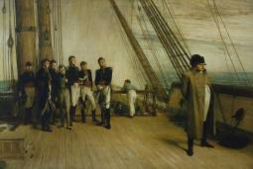
In the evening, when Napoleon appears on deck, throngs of onlookers go wild and in the scramble to get even closer, boatloads of spectators sink. No one is allowed on or off HMS Bellerophon and eventually, to stop the mayhem, she sails for Plymouth where similar scenes await. When Napoleon is transferred to HMS Northumberland, Billy Ruff’n sets sail to Sheerness where her crew is paid off.
With the French-English war now over, the Royal Navy reduces its headcount from 145,000 to 19,000. Thousands flood the streets looking for work but there are very few jobs to fill. By 1817, London is in the grip of fever. With little chance of earning money in a sick and gloomy city, John turns back to a life at sea.
As far away as possible
For several years, sealing and whaling ships have been making speculative voyages to the southern fisheries, often returning with lucrative cargoes of oil and pelts for the London market. It is a long, risky venture but men are enticed by the promise of a good return.
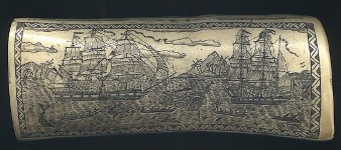
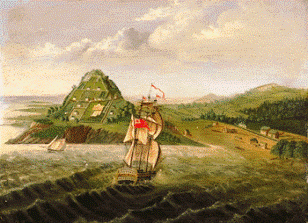
On 11 August 1817, John Lidiard joins the crew of the whaling ship Indian under Captain William Swain, of America, and sets sail for the South Seas. Early whale ships replenish at the Galapagos Islands and throughout the Pacific before sailing with caution into New Zealand waters. Captains and crew are wary of the native New Zealanders. The burning of the Boyd and massacre of its crew a few years earlier is still on every sailor’s mind. Eight months pass before Indian reaches New Zealand’s Bay of Islands, arriving with Foxhound, another London whaler.
As the ships arrive, Māori in waka paddle out to surround them, each world sizing the other up. The whalers need water, pork, potatos, and wood for repairs. Local Māori are looking for opportunities to trade, having very quickly realised the advantage the skills and items found onboard visiting ships will bring them over rival tribes.
On John’s first night at the Bay of Islands, Captains Swain and Watson are joined on board Foxhound by missionaries Kendall, King, and Hall. New Zealand’s first mission station is only three years old, and visiting ships are still relatively few and far between. The missionaries seek news and supplies from the outside world, while the whaleship masters are eager to hear how they can replenish their ships. John and his crewmates find themselves in very different company. New Zealand Māori men are physically big and strong, with sharp, inquisitive minds. They are good humoured until offended and work hard as crew when onboard whaleships.
The women, despite being treated as currency, make the best of their situation. Full of song and laughter, many whalers form close attachments to Māori girls and seek them out on returning visits to the Bay. Women stay on the ships while in port and some remain on board for voyages to the fishing grounds.
The next port for Indian is Sydney Cove where John and his crewmates unload a cargo of Porter’s Ale, slop clothing, and soap. In 1818, convicts still outnumber settlers in the prison colony but business and enterprise are beginning to develop. The Sydney Gazette reports that three weeks after arriving in Sydney Cove, the crew of Indian are mustered onshore and make their way back to the ship to resume their journey. When the men board the ship, it’s said they become “unruly” and chief officer Silas West is forced to call for Captain Swain who is still ashore making preparations to leave. After speaking to his chief officer, and noticing that the men are in a “very untowards state”, Captain Swain calls one of them to the quarterdeck to explain their grievance.
Such is the ire of his crewmates, that 10 or 12 follow the summoned man to the quarterdeck, and Captain Swain quickly finds himself up against a very unhappy crew. Swain later tells police that the men were insulting, disrespectful, and abusive, and that some demanded their immediate release from the ship. One man in particular commands their release and Captain Swain orders him from the quarterdeck. When the man refuses to budge, Captain Swain pushes him and a scuffle breaks out, during which the captain is reportedly struck. The tussle culminates in Captain Swain being himself driven forward by the men. After the captain manages to extricate himself from the situation, the police are called onboard to arrest the three principal offenders – Luke Wade, William Dally, and John Liddiard.
John, Luke, and William most likely spend one or two nights in the notorious George Street jail, before they are to appear in court. There, they are committed for trial on a charge of mutiny for the assault on Captain Swaine on the quarterdeck of the ship Indian. Until the court transcripts are uncovered, what happened next remains a mystery. However, on 22 September 1818, Luke Wade, William Dally, and John Liddiard, having survived a charge of mutiny, are onboard the whaling ship Indian when it sets sail from Sydney Cove.
After almost two years at sea hunting whales, John arrives home to England in July 1819. Indian‘s crew are paid off and once more with pockets jingling, John heads for London.
A savage life
Indian returns to the South Seas just two months later but this time, John is not on board. Instead, he transfers to another whaler, Vansittart, commanded by Captain Thomas Hunt. On Vansittart, John is now a boat steerer, which means his cut of the profit is higher than that of an ordinary seaman. With him from Indian are Thomas Davis, James Sawyer, and Luke Wade.
John and his crewmates set out from Deal in January 1820 bound once again for the South Seas, and eight months later Vansittart arrives in Sydney having taken on 100 barrels of oil during her voyage out.
After Sydney, Vansittart calls at the Bay of Islands where she falls in with Cumberland. If life as a Jack Tar in the navy had been hazardous, it is little better on whale ships. The whales suffer the worst fate, but men are often tangled in ropes and dragged to their death. When out for the kill, whalers give chase in small whaleboats sometimes rowing for miles in pursuit of a whale. At times, boat crews become disoriented after losing sight of their ship, they drift off into an endless expanse of unforgiving ocean with no hope of survival. Once a whale is killed, the whalers tow back to the ship, with risk of it sinking and pulling them under. Banck at the ship, the men strip the whale of its blubber, boil it down into oil, and store it in barrels. No sooner is the process finished when another whale is spotted and off they set again.
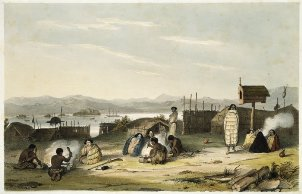
Vansittart makes several calls to the Bay of Islands during this voyage and while there in May 1821 John and his shipmate Luke Wade leave the ship after falling out with chief mate William Whippy.
As the only Europeans living at Kororāreka, the men are under the jurisdiction of Ngati Manu chief, Pōmare. The nearby missionaries consider Pōmare to be one of the most important men in the Bay, second only to Hongi Hika in instilling fear in the hearts of the enemies he wages war against.
They also consider Pōmare an expert in the art of preserving the head of his victims which become gruesome artifacts sought after as items of trade by visiting whalers.
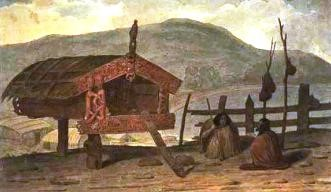
Chief Pōmare quickly understands the benefit of having European residents among his tribe and is keen to increase the number of ships that anchor in his area. Potatoes are cultivated specifically for trade and muskets and gunpowder are highly prized. In order to maintain and fix muskets, and so as not to be duped by traders offering faulty guns, local chiefs enlist Europeans to act as go-betweens. These resilient men who live among Māori will come to be known as Pakeha-Maori, having left behind their own culture to embrace te ao Māori, or having been dragged into it. Some of them are kept as slaves, some escape as soon as they can find a ship that will take them, and those who display courage and a genuine interest in Māoridom sometimes rise to the status of chief.
Two years after leaving their ship at the Bay of Islands, the Wesleyan missionaires enlist Luke Wade as a servant for their mission station in Whangaroa. John continues living at Kororāreka, most likely in a small wooden hut just off the beach and probably with a woman closely linked to his chief protector, Pōmare.
The turning tide
By the late 1820s, the easy relationship between the whalers and the missionaries disintegrates, mainly due to musket trading. The mission goes to great lengths to avoid trading in weapons which at times sees them facing starvation. They are also morally repulsed by the polygamous relationships the residing seamen indulge in with Māori women. The sailors, at the mercy of the chiefs for survival, live by their laws and customs. Some take part in skirmishes or fight in inter-tribal wars, and many witness frequent acts of cannibalism. Living as a Pakeha-Māori is a difficult life and most men last only a matter of months. John, however, is still living at Kororāreka six years later when an incident occurs that sees the mission and whalers act in a rare display of unity.
| In early January 1827, John is busy sawing boat planks for Captain Duke of the whale ship Sisters, when a brig sails into the Bay. She anchors close to Sisters, and another whaler Harriet replenishing at Kororāreka before returning to England. John watches as Captain Duke rows out and brings in the vessel. John and some Māori take John’s own boat and and head out to the ship. Looking around onboard, he notices several men in military uniform all on sentry, but nothing appears shipshape. He loses no time getting over to the Sisters to ask Captain Duke and first mate Philip Tapsell what they think of the ship. |
A note is slipped off the brig and the convict captain confesses to mutiny but is allowed to return to the Wellington. Duke isn’t keen to become involved in a dangerous confrontation with a ship full of bloodthirsty villans, but Tapsell and Lidiard go among the crew and rally the men to recapture the pirated ship.
A few years earlier, in 1823, Henry Williams established a new mission station at Paihia directly across from Kororāreka. Williams and John Lidiard had crossed paths before when Williams was a midshipman aboard HMS Endymion in the squadron that captured USS President. Back in the Bay, Williams urges the whale ship captains to use their great guns against the mutineering convicts. Tapsell, who like John has been a sailor all his life, takes careful aim at the Wellington, and sends a shot into her quarter before a second shot takes out her top rigging. John is sent ashore to alert local Māori, evidently with much success, as the convicts agree to surrender only if they are allowed to go ashore and on the condition that the musket-armed native New Zealanders surrounding the ship in waka agree not to harm them.
Their demands are agreed to and many convicts flee ashore causing great concern for the mission who are unable to protect themselves against desparate criminals. Captain Duke enlists John to have the Māori find them and one by one they are recaptured, secured, stripped, taken back to the ship, and exchanged for muskets and casks of gunpowder. A few escape, one of whom John sights many years later living “more as Māori than European” in Port Nicholson, coincidently now known as Wellington. The lives of five convicts, already sentenced to death before the mutiny, end in the gallows after they arrive back to Sydney. A large crowd boos as the men drop, many sympathising with them for showing no violence during the mutiny and being tricked into surrender.
The following year, Te Whareumu, known as King George, a good friend to the Europeans and current chief of Kororāreka, is killed while trying to avenge the death of Pōmare’s son. Left under the protection of a less powerful chief, both Māori and European residents are susceptible to plundering by competing tribes from the northern Bay of Islands. About this time, the original settler John Lidiard, perhaps with nothing left to stay for, joins a ship and sails away from the people with whom he’d made his home for so many years.
Southward bound
Almost all ships trading off the coast of New Zealand call at the Bay, so word quickly spreads of developments in other areas of the country. The latest talk is of the value of flax, and in Sydney vessels are preparing to head for Cook Strait between the North and South Islands in search of the new commodity. John may have acted as an interpreter on a trading ship as after so long living among Māori, his knowledge of tikanga Māori (customs and practices) and te reo Māori (language) would have been invaluable to captains seeking flax. However he ends up moving south, if he is hoping to find a more peaceful place to settle, he sails right into the wrong place.
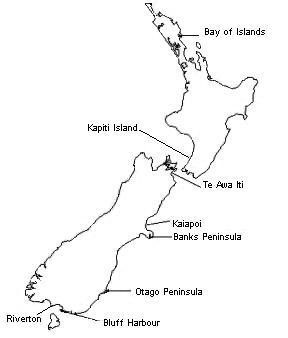
In 1829, former sealer Jacky Guard is living in what is now known as the South Island’s Marlborough Sounds selling whalebone to passing ships, of which there were plenty, all in search of flax. Guard’s life is not easy, with local Māori often harassing him. However, it is a chief from the Kapiti region who turns everyone’s world upside down. For several years, the South Island’s Ngāi Tahu people have been embroiled in their own revenge-fueled inter-tribal war, which comes to be known as the Kai Huānga Feud. The war has almost decimated the feuding relatives, but they quickly set aside their differences when northern warlord Te Rauparaha makes his intentions clear.
With one eye on Ngāi Tahu’s precious greenstone, Te Rauparaha annihilates the sub-tribe Ngāti Kurī at Kaikōura, then set his sights on Ngāi Tahu’s main fortified pā at Kaiapoi, north of where Christchurch city stands today. Te Rauparaha visits Kaiapoi pā and while there, an event occurs that will have dire consequences for the entire southern tribe. Several of Te Rauparaha’s Ngāti Toa chiefs are killed when fighting breaks out inside the pā during trade negotiations. It’s a bitter blow for the northern chief. He gathers his men and returns home filled with rage. There, he plots his revenge and waits until the time is right to strike. That time soon comes with the help of a European captain and his ship. What happens will become one of the darkest events in New Zealand history.
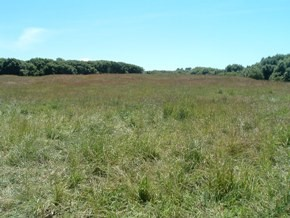
One night to change them all
By 1830, Guard has established one of the first shore whaling stations in New Zealand. Whalers settle at Cloudy Bay for the hunting season where they work hard and played hard. Migrating whales came into Cloudy Bay close enough for Guard’s men to take to their whale boats, frantically row out to the whale, kill it, and tow it back to shore.
Several trading ships visit the area seeking flax but are finding it increasingly difficult to secure a cargo. Māori tribes either refuse to trade or raise the price. Captains become frustrated and anxious at the prospect of returning to Sydney empty, with no profit, and the prospect of a mutinous crew. Into the perfect storm of difficult-to-aquire flax and a warrior chief hellbent on revenge, sails Captain John Stewart and his brig Elizabeth. In return for a cargo of flax, Stewart agrees to transport Te Rauparaha and 100 of his warriors to the South Island.
Elizabeth arrives at Akaroa Harbour, on Banks Peninsula, home of Ngāi Tahu’s paramount chief Tama-i-hara-nui, or Te Maiharanui. The northern warriors remains concealed below deck, unseen by the unsuspecting southern tribes people for several days. Eventually, Te Maiharanui, his young daughter Roimata, and later his wife, are welcomed aboard the ship by Captain Stewart, believing he wants to negotiate a deal for a cargo of flax.
Once the Ngāi Tahu chief is onboard, Te Rauparaha and his warriors leap from their hiding places and capture him. His enemies attach him to the ship by a hook through the skin under his jaw, but it is a European crew member who first clamps the chief in irons. Unable to escape, Te Maiharanui can do nothing but listen to the screams of terror as the northern warriors go ashore and massacre his people.
Mission accomplished, Captain Stewart weighs anchor and sails back to Te Rauparaha’s home at Kapati Island. The prisoners are still onboard along with many baskets of the victims’ flesh for feasting on. During the voyage, Te Maiharanui manages to kill his own daughter, rather than see her fall into the hands of his enemy. When Te Rauparaha discovers what Te Maiharanui has done, he is consumed with anger. As soon as they reach Kapiti Coast, he hands his captives over to the wives of the chief’s who were earlier killed at Kaiapoi pā. The widows slowly and cruelly torture the southern chief and his wife to death.
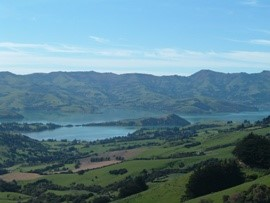
This event is a sorry affair for Ngāi Tahu. They now live in constant dread of Te Rauparaha returning, and it was a fear well-founded. Not content with killing the tribe’s paramount chief, Te Rauparaha is now focussed on wiping out the entire tribe. During his next raid, he heads back to the stronghold of Kaiapoi and after a lengthy siege, he overruns the pa, killing many hundreds of people inside. Those who survive flee across the hills to Banks Peninsula, but still they cannot escape the wrath of the northern chief. His final assaultis on the tiny peninsula inside Akaroa Harbour, Ōnawe. There, a fort is quickly built to defend the region’s remaining Māori. When Te Rauparaha’s war canoes entere the harbour everyone flees to the safety of the fortified pā.
Seeing that they have access to food and water, Te Rauparaha realises a siege will not work here, so he sets about preparing his final plan. Using survivors taken prisoner from Kaiapoi as decoys, Te Rauparaha lures some of the bewildered Ngāi Tahu out. Once the gates are open and defenses down, his warriors set upon the pā, killing everyone inside. Only a handful of people survive by fleeing into the hills, and for some time after this, Banks Peninsula is depopulated.
The power of Ngai Tahu now shifts to the chiefs in the south of the South Island, Te Whakataupuka and Tūhawaiki. A fort is built on Ruapuke Island in Foveaux Strait, and the tribe makes preparations to defend themselves against Te Rauparaha’s imminent attack. Young women and child survivors of Te Rauparaha’s raids are sent south for protection while the men set about arming themselves. Muskets are in huge demand, and are traded between whalers and Māori.
Settling down
About this time, John Lidiard meets his future wife, Kearaki, at Banks Peninsula. His protection means she is safe from the prospect of a violent death at the hands of the northern warriors. Kearaki sails south with John as he works his way down the coast of the South Island. Almost all whaling ventures are now shore based, with only the Americans still participating in deep sea whaling. The Weller brothers from Australia build a large shore station at Otago. Sadly, almost as soon as it is complete, the entire station burns to the ground and has to be rebuilt.
Shortly after this, Tūhawaiki, known as Bloody Jack to the Europeans, rallies his men, heads north and defeats Te Rauparaha. It is a momentous occasion for the southern Māori who have lived in constant fear of the northern chief for many years. In reality, the war is not over as long as Te Rauparaha still lives, and although he literally slipped through one man’s fingers during battle, they now know he is far from invincible.
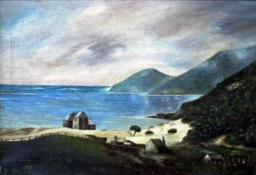
The whalers continue their move south as more venturers start out from Australia. One such entrepreneur is Johnny Jones. Jones takes over Preservation station in southern Fiordland, which was established around the same time as Jacky Guard’s Cloudy Bay station. From there, Jones begins setting up several smaller shore stations scattered around the southern coast and islands. This draws whalers from the north and across the Tasman, and by the mid 1830s various communities begin to form. Life between southern Maori and Europeans is at times strained but mostly they live and work together as friends and family. Some settlers obtain land deeds from Māori, and others settle down with their wives in the hope of enjoying a quieter life.
About 1835, aged 46, John sets up residence at the Bluff settlement started many years earlier by James Spencer. Spencer had been another early arrival at the Bay of Islands. His ship Cossack was wrecked at Hokianga, and he and his fellow survivors walked for five days in search of help. James Spencer worked for the mission station in return for his keep until he could get passage back to Sydney. However, he became embroiled in mission station politics and was refused passage on the next available ship. Being no longer under the care of the mission Spencer was forced to sleep on the beach until he was able to stow away.
While living at Bluff, John works at Johnny Jones’s Stirling Point station, managed by its namesake William Stirling. These are the good years for John and his friends. They teach their Maori wives to cook, clean, and sew in the European fashion and to grow gardens around their houses. The girls learn quickly and take great pride in keeping their house shipshape for their hard working husbands. The sea is teaming with whales and whaling ships, many of which call into Bluff. The number of American vessels visiting climbs rapidly, and the settlers are a colourful band of men that welcome almost anyone into their fold. Rum flows, as do the stories of life at sea and in the old country.
In 1837, the northern Ngāti Toa tribe through their allies Ngāti Tama, attempt their last assault on Ngāi Tahu. Traveling down the West Coast of the South Island, they make their way south and attack the southern tribe at Bluff. Muruhiku Māori defend themselves well and are victorious over the northern intruders, capturing several slaves, one of which is given to a new settler.
Local Māori are jubilant and whalers are filled with relief. This is to be the last battle in the south, and eventually Te Rauparaha’s own son, a Christian convert, visits the area to help negotiate an end to hostilities between the two tribes.
In July 1837, Kearaki gives birth to a baby girl, Ann, known as Nancy. It is a dangerous time to begin life, as disease from visiting boats begins to plague southern Māori. Over the next few years many die from measles. While losing their lives, they are also losing their land, selling huge tracts to whalers and settlers, something both parties will feel the repercussions of in future years.
A new vocation
The outside world of commercialism and development is finally catching up with the hardy band of settlers who have for so long enjoyed their own space and managed their own lives in the south. More boats arrive. One brings new settler John Howell who sets up a station at Jacob’s River, now known as Riverton. Officials begin visiting too, and in June 1840, HMS Herald arrives to collect signatures for the Treaty of Waitangi. At Ruapuke Island three chiefs Tuhawaiki, Kaikoura, and Taiaroa sign Te Tiriti. Tuhawaiki and one of his men wear uniforms they’d acquired in Sydney. Next coes Stirling’s boat Success, with the first white women and child to settle in the south.
In 1843, whale exports halve and whaling stations begin to close. The indiscriminate slaughter of whales has caught up with the whalers, just as it did with the sealers at the turn of the century. Having exhausted their source of income, the heydays of whaling are well and truly over.
In early 1844, Bishop Selwyn arrives in Foveaux Strait, visiting all of the communities to perform marriages and baptisms. On 4 February at James Spencer’s house, Bishop Selwyn marries John Lidiard to Kearaki. John signs his name on the register. William Stirling also marries his partner, and six children are baptised. By 1844, there is said to be about 150 mixed race children living in Foveaux Strait. These are the children of a resilient, self-reliant community and the ancestors of many thousands of New Zealanders who descend from the early marriages of Foveaux Strait.
Visitors to Bluff are impressed with the community that has developed there, but the settlement’s days are numbered.
Stirling’s ship Success us totally wrecked at Bluff after the crew spend the evening in Spencer’s pub. The 40 odd settlers are now hard-pressed to make a living as few ships call. In 1846, the original settler, James Spencer, dies at sea while returning from Sydney. It is the beginning of the end for the little community.
John Lidiard continues to live at Bluff until the death of his wife Kearaki. After this, he moves with his daughter to Jacob’s River to work for Captain Howell. The Jacob’s River settlement is thriving with 70 to 80 residents.
In later years, a little school in the district is opened and John gathers up the children who until now have enjoyed a free run.
Captain Howell’s son George later says of his teacher “Morally and spiritually he was a good teacher and a good leader. Frequently he would lecture us on our duties to one another and always he stressed the necessity for telling the truth…..He was always dignified. In fact, he set great store upon personal dignity, and he was thorough in all that he undertook. He was a fine man.”
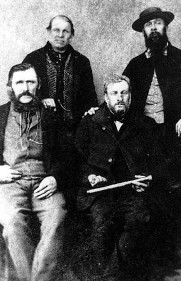
At the age of 14, John’s daughter Nancy travels to Ruapuke Island to marry James Lee, the son of John Lee, who had also been in the Bay of Islands in the early years. Within three years James dies and in 1854, Nancy marries the son of another new settler Edward Stevens. A short time later while Nancy was pregnant with their child, Edward loses his life too. Two times a widow by the age of 19 and an unmarried expectant mother, these are heartbreaking times for John and his daughter. Two years later, Nancy meets her third husband William Thomas and together they raise her only child Edward Stevens.
The end
Time marches on. Immigrant ships arrive, communities turn into towns, roads turn into streets, and a new nation forms before John’s eyes. Having outlived all of his contemporaries, on 9 January 1876, John Lidiard – ship boy, Jack Tar, whaler, Pākehā-Māori, husband, father, settler, teacher, survivor – dies at his daughter’s home at the age of 86.
Before he dies, a companion sits with John while he recounts the story of his incredible life, so that it is captured and remembered. Today, that document remains undiscovered and perhaps, forever lost in time.
Inscription on John Lidiard’s headstone
“In loving memory of Ann Thomas who died 26th April 1900 aged 63 years. Also John Clark Lidiard who died 1877 aged 88 years (sic). Also William Thomas died 5th October 1903 aged 68 years. Also George de Paravicini, beloved son of John and Emma Simon born 10th September, died 30th December 1873.”